





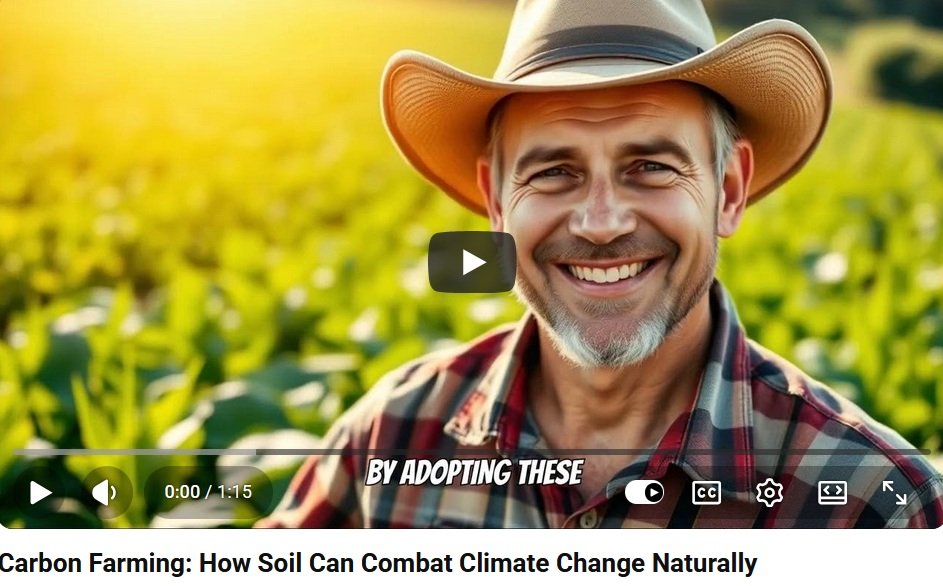
Carbon farming is emerging as one of the most promising approaches for improving soil health, increasing agricultural resilience, and helping combat climate change. By using farming and land management practices that capture and store atmospheric carbon in the soil, carbon farming turns agricultural land into a powerful natural climate solution.
At the center of carbon farming is a simple but powerful idea: healthy soil can store enormous amounts of carbon while supporting healthier crops, stronger ecosystems, and improved water cycles. Instead of viewing soil merely as dirt, carbon farming recognizes soil as a living biological system capable of helping restore environmental balance.
As climate concerns continue to grow worldwide, farmers, scientists, environmental organizations, and policymakers are increasingly exploring how regenerative land management practices can help remove carbon dioxide from the atmosphere while rebuilding degraded farmland.
What Is Carbon Farming?
Carbon farming refers to agricultural and land management techniques designed to capture carbon dioxide from the atmosphere and store it in plants, trees, and soil organic matter. This process is commonly known as carbon sequestration or carbon drawdown.
Plants naturally absorb carbon dioxide through photosynthesis. Some of this carbon is transferred into the soil through plant roots, microorganisms, and decomposing organic matter. Healthy soils can store large quantities of this carbon for long periods of time when managed properly.
Carbon farming focuses on maximizing this natural process while improving agricultural productivity and ecosystem health.
Why Soil Matters in Climate Change
Soil contains one of the largest carbon reservoirs on Earth. However, decades of intensive agriculture, deforestation, excessive tilling, overgrazing, and chemical-heavy farming have degraded many soils and released stored carbon back into the atmosphere.
When soil loses organic matter, it becomes:
- Less fertile
- More vulnerable to erosion
- Less able to retain water
- More dependent on synthetic fertilizers
- Less biologically active
Carbon farming aims to reverse this process by rebuilding soil organic matter and restoring natural biological systems beneath the surface.
How Carbon Farming Works
Carbon farming works by increasing the amount of organic material stored in the soil while reducing practices that release carbon into the atmosphere.
Common carbon farming practices include:
- Cover cropping
- Reduced or no-till farming
- Composting
- Managed rotational grazing
- Agroforestry
- Crop rotation
- Planting perennial crops
- Mulching
- Restoring degraded lands
These practices encourage healthy root systems, microbial activity, and organic matter accumulation that naturally increase soil carbon storage.
The Role of Soil Organic Matter
Soil organic matter is critical to carbon farming success. It consists of decomposed plant material, roots, fungi, microbes, and organic compounds that enrich the soil and support plant growth.
As organic matter increases, soil becomes more productive and resilient. Healthy soil rich in organic material can:
- Store more carbon
- Retain more water
- Support beneficial microorganisms
- Improve nutrient availability
- Reduce erosion
- Increase crop resilience
This creates a positive cycle where healthier soil supports healthier plants, which in turn contribute more organic material back into the soil.
Cover Crops and Carbon Storage
Cover crops play a major role in carbon farming systems. These crops are planted primarily to protect and enrich the soil rather than for harvest.
Common cover crops include:
- Clover
- Rye
- Legumes
- Radishes
- Vetch
Cover crops help prevent erosion, improve soil structure, increase microbial activity, suppress weeds, and add organic matter to the soil. Their root systems also transfer carbon deeper into the ground.
No-Till and Reduced Tillage Farming
Traditional tilling can disturb soil structure and release stored carbon into the atmosphere. No-till or reduced-till farming minimizes soil disturbance, allowing soil ecosystems to remain more stable.
Benefits of reduced tillage include:
- Reduced carbon loss
- Improved soil moisture retention
- Less erosion
- Increased microbial activity
- Improved soil structure
Many regenerative farmers now combine no-till systems with cover crops and composting to maximize carbon storage.
Managed Grazing and Livestock Integration
Livestock can also play an important role in carbon farming when managed correctly. Rotational grazing systems move animals through different pasture areas in controlled patterns that mimic natural grazing ecosystems.
Managed grazing can:
- Stimulate grass growth
- Increase root development
- Improve soil fertility
- Enhance carbon storage
- Reduce land degradation
Animal manure naturally adds nutrients and organic matter back into the soil, helping rebuild biological activity.
Carbon Farming and Water Retention
Healthy carbon-rich soil acts like a sponge, absorbing and retaining significantly more water than degraded soil. This is especially important in regions affected by drought and extreme weather.
Improved water retention helps:
- Reduce irrigation needs
- Prevent runoff
- Reduce flooding
- Improve drought resistance
- Support healthier crops
As climate patterns become more unpredictable, water-efficient soils may become increasingly valuable for agriculture.
Economic Benefits for Farmers
Carbon farming may also provide economic advantages for farmers over time. Healthier soils often lead to:
- Lower fertilizer costs
- Reduced chemical dependency
- Improved crop resilience
- Better long-term productivity
- Potential carbon credit opportunities
Some emerging carbon markets now offer financial incentives for farmers who adopt practices that increase measurable carbon storage in soils.
Challenges of Carbon Farming
Although carbon farming offers major potential benefits, adoption can be challenging.
Some common barriers include:
- Transition costs
- Learning new farming methods
- Short-term yield adjustments
- Need for specialized knowledge
- Difficulty measuring soil carbon accurately
- Limited financial support in some regions
Despite these challenges, interest in regenerative and carbon-focused farming continues to grow worldwide.
The Future of Carbon Farming
The future of carbon farming is closely connected to regenerative agriculture, climate-smart farming, and sustainable food systems. Advances in technology are helping farmers monitor soil health through:
- AI-powered soil analysis
- Satellite imaging
- Precision agriculture
- Soil carbon measurement tools
- Smart irrigation systems
Governments, universities, nonprofits, and agricultural companies are increasingly investing in research and programs that encourage carbon sequestration through improved land management.
As global demand for sustainable agriculture grows, carbon farming may become a major part of future climate solutions and food production systems.
Final Thoughts
Carbon farming represents a powerful shift in modern agriculture by recognizing soil as one of nature’s most valuable climate tools. Through regenerative practices that rebuild soil organic matter and restore biological health, carbon farming helps improve agricultural productivity while removing carbon dioxide from the atmosphere.
Healthy soil supports stronger crops, better water retention, richer biodiversity, and more resilient ecosystems. Rather than exhausting the land, carbon farming focuses on restoring it for future generations.
As awareness of climate change and environmental sustainability continues to grow, carbon farming may become one of the most important strategies for creating healthier food systems, restoring degraded landscapes, and harnessing the incredible power hidden beneath our feet — the power of the soil.
American Farmer Trends