





AI Trends in Agriculture for 2026: How Artificial Intelligence Is Transforming Farming
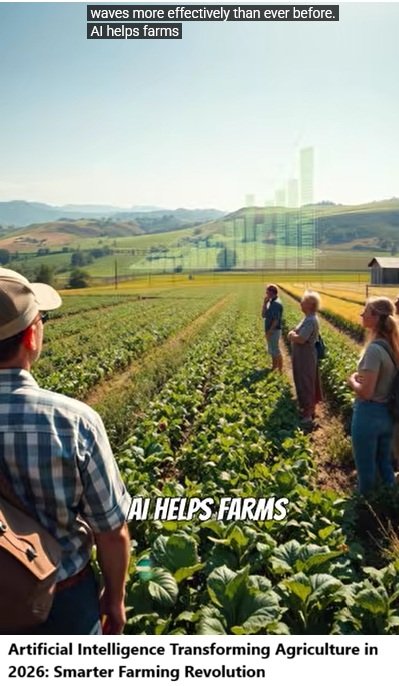 Artificial intelligence is rapidly changing the future of agriculture. In 2026, farms are becoming smarter, more connected, and increasingly automated as AI technologies help farmers improve crop yields, reduce waste, lower costs, and respond to climate challenges. What once seemed futuristic is now becoming part of everyday farming operations around the world.
The agriculture industry faces enormous pressure from rising food demand, labor shortages, unpredictable weather patterns, water scarcity, and increasing operational costs. AI is emerging as one of the most powerful tools helping farmers solve these problems while improving sustainability and productivity.
Industry experts now describe agriculture as entering a new era of “smart farming,” where artificial intelligence, robotics, sensors, drones, machine learning, and predictive analytics work together to create highly efficient farming systems. :contentReference[oaicite:0]{index=0}
1. Precision Farming Powered by AI
Precision agriculture continues to be one of the biggest AI trends in farming for 2026. Instead of treating an entire field the same way, AI systems analyze detailed information from soil sensors, GPS data, drones, weather systems, and satellite imagery to help farmers manage crops with incredible accuracy.
Farmers can now apply fertilizer, pesticides, and irrigation only where needed instead of across entire fields. This reduces waste, saves money, improves yields, and lowers environmental impact.
AI-driven precision farming systems are helping growers:
- Monitor crop health in real time
- Detect diseases earlier
- Identify nutrient deficiencies
- Predict harvest timing
- Reduce water consumption
- Optimize fertilizer usage
The global precision agriculture market is expected to continue growing rapidly as more farms adopt AI-enabled technologies. :contentReference[oaicite:1]{index=1}
2. Autonomous Tractors and Agricultural Robots
Agricultural robotics is moving from experimentation to real-world deployment in 2026. AI-powered tractors, robotic harvesters, autonomous sprayers, and smart weed-control systems are becoming increasingly common on large commercial farms.
Modern agricultural robots use computer vision, sensors, machine learning, and GPS navigation systems to operate with minimal human intervention. Some machines can already:
- Plant seeds automatically
- Identify weeds and spray only targeted areas
- Harvest fruits and vegetables
- Monitor livestock health
- Navigate fields autonomously
- Perform precision irrigation
Physical AI and robotics are expected to become one of the defining trends shaping agriculture over the next several years. :contentReference[oaicite:2]{index=2}
3. Generative AI Becomes a Farming Assistant
Generative AI is becoming one of the most exciting developments in agriculture. Instead of requiring farmers to interpret complicated data dashboards, AI assistants can now provide simple conversational recommendations.
Farmers may ask questions such as:
- “Should I irrigate Field 4 today?”
- “What disease is affecting these leaves?”
- “What is the best planting schedule this week?”
- “How can I reduce fertilizer costs?”
Generative AI systems can analyze weather forecasts, sensor data, satellite imagery, soil conditions, and historical trends to provide real-time recommendations. Experts believe conversational AI will become a standard farm management tool. :contentReference[oaicite:3]{index=3}
4. AI-Driven Smart Irrigation Systems
Water conservation is becoming a major focus in global agriculture. AI-powered irrigation systems can monitor soil moisture, weather conditions, crop stress, and evaporation rates to determine exactly when and where watering is needed.
Some advanced robotic irrigation systems can even identify individual plants or trees that require water instead of watering entire fields uniformly. :contentReference[oaicite:4]{index=4}
Benefits of AI irrigation systems include:
- Reduced water waste
- Lower energy costs
- Healthier crops
- Improved drought resilience
- Better resource management
5. Edge AI and On-Farm Processing
Another major trend in 2026 is the growth of Edge AI in agriculture. Instead of sending all farm data to cloud servers, more AI processing is now happening directly on farm equipment and local devices.
Edge AI allows:
- Faster decision making
- Reduced internet dependence
- Better performance in remote areas
- Improved privacy and security
- Lower latency for robotics and automation
This is especially important for farms located in rural areas with unreliable internet access. :contentReference[oaicite:5]{index=5}
6. AI Crop Disease Detection
Computer vision systems powered by AI are becoming highly effective at detecting plant diseases early. Farmers can use drones, smartphones, or automated cameras to identify problems before they spread across crops.
AI systems analyze leaf patterns, discoloration, texture changes, and growth abnormalities to identify disease risks with impressive accuracy. Early detection helps farmers reduce crop losses and lower pesticide usage.
Researchers continue improving deep learning models for crop monitoring and disease prediction. :contentReference[oaicite:6]{index=6}
7. Climate-Smart Agriculture
Climate volatility is pushing farmers toward AI-driven climate-smart agriculture. AI tools help growers prepare for:
- Droughts
- Flooding
- Heat waves
- Changing growing seasons
- Extreme weather events
Predictive AI systems can recommend planting schedules, irrigation strategies, crop rotation methods, and weather-response plans to help farms become more resilient. :contentReference[oaicite:7]{index=7}
8. AI and Agricultural Data Analytics
Farms generate enormous amounts of data from machinery, sensors, drones, weather systems, satellites, and supply chains. AI is becoming essential for organizing and interpreting this information.
Advanced farm management platforms now help farmers:
- Forecast yields
- Track profitability
- Monitor equipment health
- Predict maintenance needs
- Optimize labor allocation
- Improve planting decisions
Many farms are using AI first for financial and operational management before expanding into full autonomous farming systems. :contentReference[oaicite:8]{index=8}
9. AI-Powered Drones and Satellite Monitoring
Agricultural drones are becoming smarter and more autonomous in 2026. AI-powered drones can scan fields, monitor crop health, identify pest outbreaks, and map irrigation problems much faster than traditional manual inspections.
Combined with satellite imagery, drones provide farmers with near real-time visibility across large farming operations. AI systems analyze these images to detect problems invisible to the human eye.
10. Sustainability and Reduced Chemical Usage
One of the most important long-term goals of AI in agriculture is sustainability. Precision systems help reduce excessive use of:
- Water
- Herbicides
- Pesticides
- Fertilizers
- Fuel
Selective spraying robots and AI-controlled equipment allow chemicals to be used only where necessary instead of across entire fields. This reduces environmental impact while lowering costs for farmers.
Final Thoughts
AI is transforming agriculture from a labor-intensive industry into a highly data-driven and intelligent system. In 2026, farms are becoming smarter through robotics, predictive analytics, generative AI, autonomous machinery, precision irrigation, and advanced monitoring technologies.
The future of agriculture will likely combine artificial intelligence, robotics, IoT sensors, edge computing, and sustainable farming practices to create more resilient food systems. While challenges remain, including cost, connectivity, and data management, AI is already helping farmers improve productivity while reducing waste and environmental impact.
As global food demand continues to rise, artificial intelligence may become one of the most important technologies shaping the future of farming and food production worldwide.
American Farmer Trends
11 AMAZING FARMS YOU HAVEN'T SEEN BEFORE
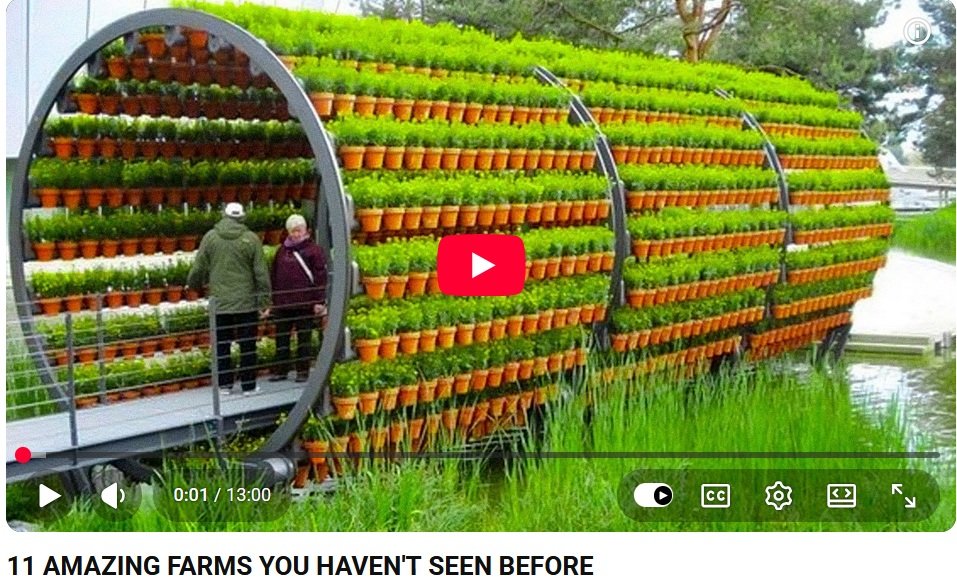
The term aeroponics, meaning “working air,” stems from the Greek words for air, “aer,” and labor, “ponos.” This form of hydroponics involves growing plants without the use of soil. Instead, it relies on air to deliver a nutrient-rich mist to the plant's roots. Plant roots are sprayed with a special Mist so they require 40 percent less water than Hydroponics.
The video above talks about how future crops will provide nutritious fresh forage for your livestock, no waste all year round production and 95% less water than conventional fields. If the feed is of good quality cows emit less methane. The system produces what is called hydrograin and comes in different configurations to help improve Farm efficiency.
It's not easier to establish local production at once in the right place, so they offer this automated hydroponic mobile farm that saves Transportation time water land and energy. One Farm can yields 240 pounds of microgreens.
A vertical farm can be built anywhere in the world and it will yield twice as much as the competition. It has a unique modular design and produces quality products all year round.
American Farmer Trends