




 C
CHydroponics is revolutionizing the way people grow plants by eliminating the need for traditional soil. Instead of relying on dirt, hydroponic systems use nutrient-rich water solutions to deliver everything plants need directly to their roots. This modern growing method allows plants to grow faster, healthier, and often with higher yields than conventional gardening.
As interest in sustainable farming, indoor gardening, and food security continues to grow, hydroponics is becoming increasingly popular among homeowners, commercial growers, urban farmers, schools, and greenhouse operators. From lettuce and tomatoes to herbs and strawberries, hydroponic gardening makes it possible to produce fresh food almost anywhere.
What Is Hydroponics?
Hydroponics is a method of growing plants without soil by using water mixed with essential nutrients. Plants are usually supported by inert growing materials such as:
- Rockwool
- Coconut coir
- Clay pebbles
- Perlite
- Vermiculite
These materials help stabilize the roots while allowing water and oxygen to flow freely around the plant.
Because nutrients are delivered directly to the roots, plants spend less energy searching for food and water. This allows them to grow faster and often produce larger harvests.
How Hydroponic Systems Work
A hydroponic setup typically includes:
- A water reservoir
- Nutrient solution
- Growing tray or containers
- Water pumps
- Air pumps or oxygen systems
- Lighting systems for indoor setups
- Growing medium
The roots either sit directly in nutrient-rich water or receive regular water circulation from pumps and drip systems. Oxygen levels are carefully maintained to prevent root rot and encourage rapid growth.
Popular Types of Hydroponic Systems
1. Deep Water Culture (DWC)
In a DWC system, plant roots are suspended directly in oxygenated nutrient water. This is one of the simplest and most beginner-friendly hydroponic methods.
2. Nutrient Film Technique (NFT)
NFT systems continuously flow a thin layer of nutrient solution over plant roots. These systems are highly efficient and commonly used for leafy greens and herbs.
3. Drip Systems
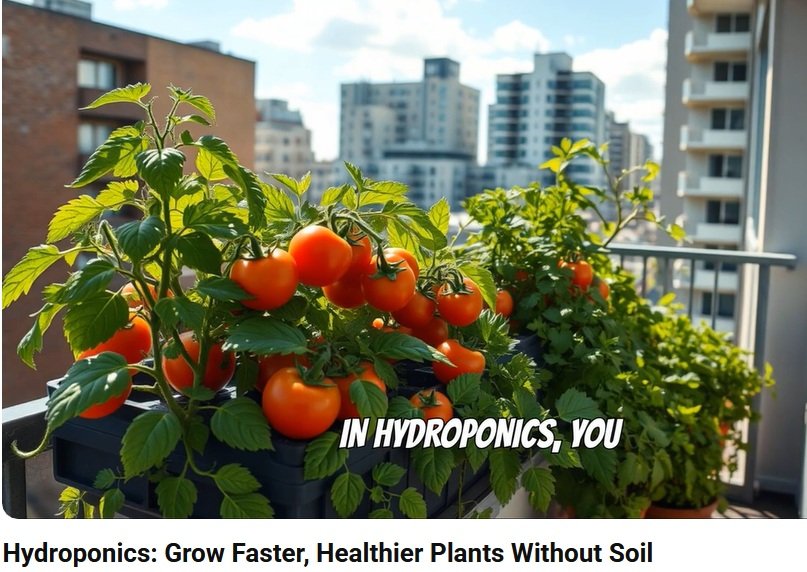
Drip hydroponics slowly feeds nutrient solution directly to each plant through small tubes and emitters. This method works well for larger plants like tomatoes and peppers.
4. Ebb and Flow Systems
Also called flood-and-drain systems, these periodically flood plant roots with nutrient solution before draining the water back into a reservoir.
5. Aeroponics
Aeroponics suspends roots in the air while misting them with nutrient-rich water. This highly advanced method can produce extremely fast plant growth.
Benefits of Hydroponic Gardening
Hydroponics offers many advantages compared to traditional gardening and farming.
Faster Plant Growth
Because nutrients are readily available, plants grow more quickly and efficiently. Many hydroponic crops mature weeks earlier than soil-grown plants.
Less Water Usage
Hydroponic systems can use up to 90% less water than traditional farming because water is continuously recycled instead of being lost into the ground.
Fewer Pests and Diseases
Without soil, many common plant pests and soil-borne diseases are greatly reduced. This can decrease the need for pesticides and chemicals.
Year-Round Growing
Indoor hydroponic systems allow people to grow food year-round regardless of weather conditions or seasons.
Space Efficiency
Hydroponics works exceptionally well in small spaces and urban environments. Vertical hydroponic systems can grow large amounts of food in compact areas.
Best Plants for Hydroponics
Some plants perform especially well in hydroponic systems, including:
- Lettuce
- Spinach
- Kale
- Basil
- Mint
- Tomatoes
- Cucumbers
- Peppers
- Strawberries
- Microgreens
Leafy greens and herbs are often recommended for beginners because they grow quickly and require less maintenance.
Hydroponics and Sustainable Agriculture
Hydroponics is becoming an important part of sustainable agriculture and food production. As climate change, droughts, and shrinking farmland affect global agriculture, hydroponic farming offers a way to grow food more efficiently.
Hydroponic systems can:
- Reduce water waste
- Lower transportation costs with local food production
- Decrease pesticide usage
- Support urban farming
- Increase food production in limited spaces
Many vertical farms and smart greenhouses now combine hydroponics with artificial intelligence, robotics, and environmental sensors to maximize productivity.
Challenges of Hydroponics
Although hydroponics offers many benefits, there are also challenges growers should consider.
- Initial setup costs can be high.
- Systems require electricity and equipment maintenance.
- Water chemistry must be monitored carefully.
- Power outages can affect plant survival.
- Some systems require technical knowledge.
However, many beginners start with simple, affordable systems before expanding into larger hydroponic gardens.
Hydroponics for Home Gardeners
Hydroponics is no longer limited to commercial farms. Home gardeners are increasingly using compact indoor systems to grow fresh vegetables and herbs inside apartments, kitchens, garages, and greenhouses.
Modern countertop hydroponic kits make it easier than ever to start growing food without needing a backyard or traditional garden space.
The Future of Hydroponic Farming
The future of hydroponics looks extremely promising. Advances in LED lighting, automation, AI-driven climate control, robotics, and smart nutrient management are making hydroponic systems more efficient and affordable.
As populations grow and climate pressures increase, hydroponics may play a major role in helping cities and countries produce food closer to where people live.
Final Thoughts
Hydroponics is transforming modern agriculture by allowing people to grow faster, healthier plants without soil. Whether used in commercial greenhouses, urban farms, schools, or home gardens, hydroponic systems offer an innovative solution for sustainable food production.
With reduced water usage, faster plant growth, fewer pests, and year-round growing capabilities, hydroponics represents one of the most exciting advancements in modern gardening and agriculture. As technology continues to improve, hydroponic farming may become an even more important part of feeding the world efficiently and sustainably.
American Farmer Trends